
Advisor Blog | May 2026
2026 Compensation Trends in Mission-Critical Construction Roles
Mission-critical roles command a premium—but the real shift is in how that pay is structured.

Demand for mission-critical facility construction—particularly data centers—continues to reshape the labor market for engineering and construction talent. Compensation data for these roles show a clear premium, but newly released data from Pearl Meyer’s 2026 Mission-Critical Facility Compensation Survey provides a nuanced understanding of where that premium appears and how meaningful it is.
The Premium Exists—But It’s Not in Base Pay
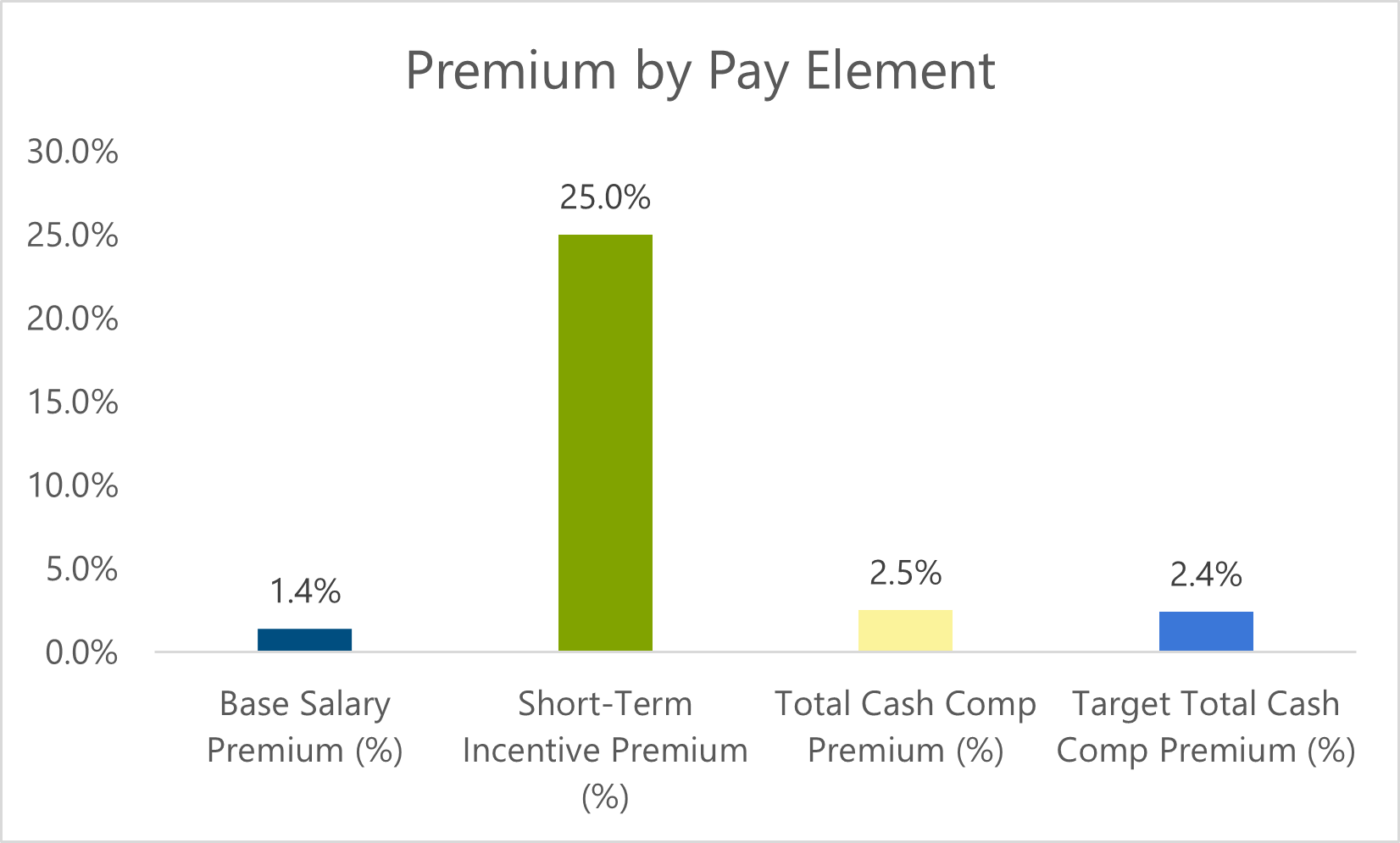
Across all roles, total cash compensation is approximately 2.5% higher than in the broader Engineering and Construction (E&C) labor market. However, this modest difference masks a more meaningful shift in compensation structure. Base pay for these same roles is only 1.4% higher, while short-term incentive compensation is roughly 25% greater.
This pattern suggests that organizations are relying more heavily on variable compensation, rather than base salary, to differentiate mission-critical roles. However, as the labor market evolves, this may change. Notably, nearly one-third of surveyed organizations are considering maintaining a separate salary structure for these roles.
Premiums Are Concentrated in Execution Roles
While an overall premium exists, it is not evenly distributed across all job families. The survey spans a broad range of positions across 18 job families, and the data shows that premiums are concentrated in roles most closely tied to project execution. In particular, General Engineering, Project Management, and Project Controls roles demonstrate the strongest premiums in total cash compensation.
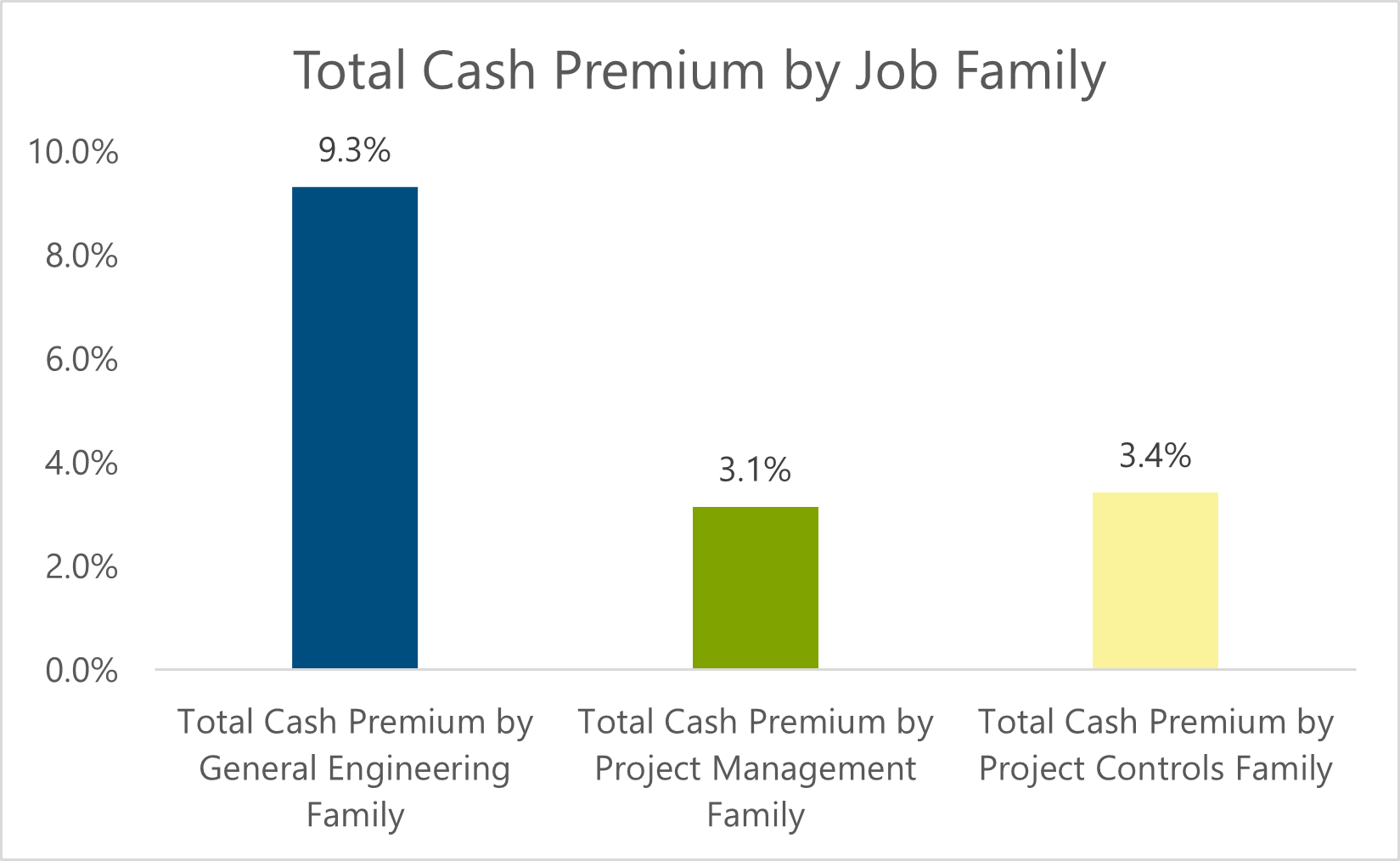
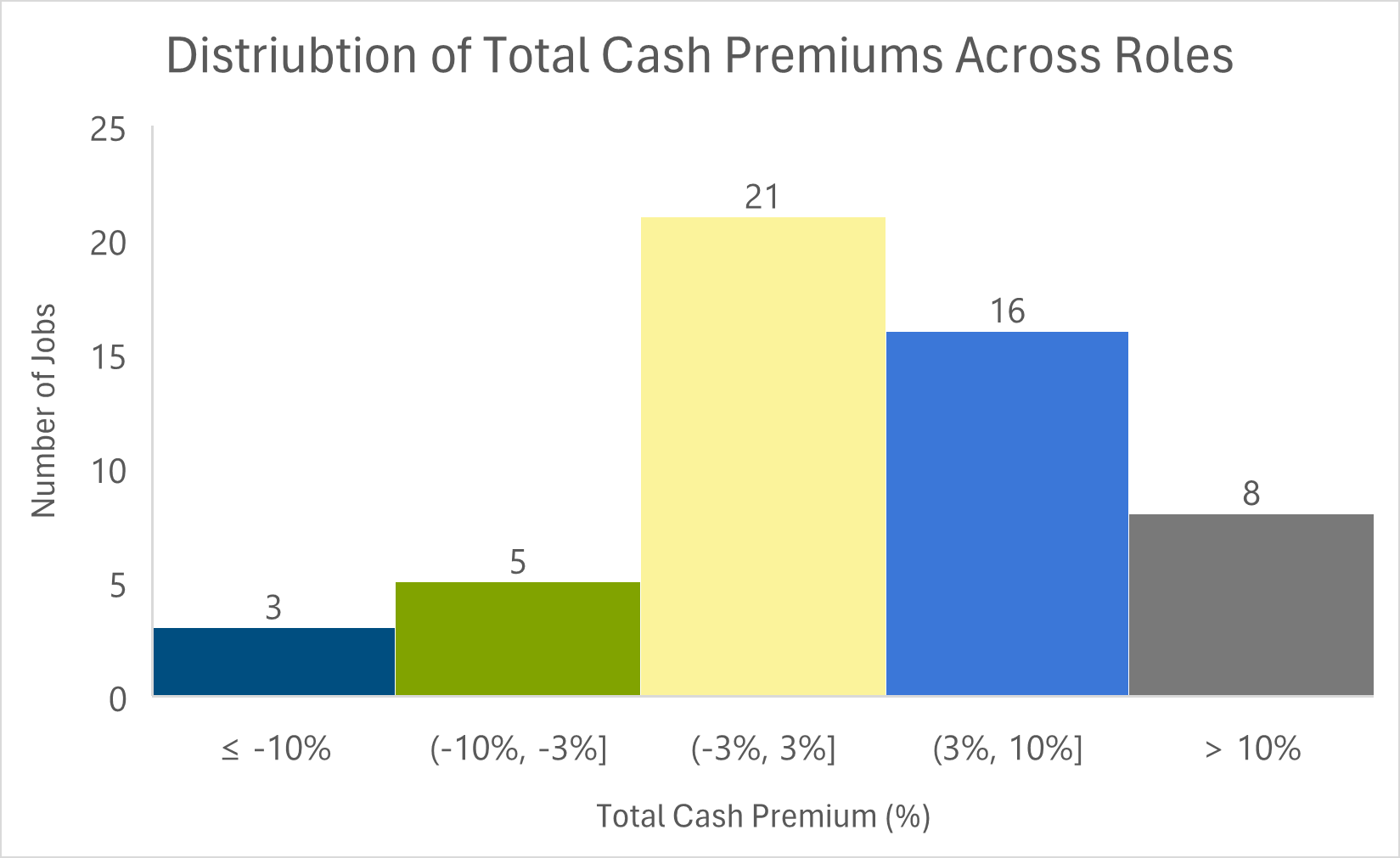
In contrast, several other job families show limited differentiation—or in some cases, compensation levels that fall at or below the broader market. As shown below, total cash compensation for a meaningful portion of mission-critical roles is flat or even below that of the broader E&C market. Organizations are not uniformly increasing compensation across all roles; instead, they are targeting higher pay toward positions that have the greatest impact on project execution and delivery.
The chart below shows the number of roles whose total cash falls within the indicated percentage range versus the broader market. For example, based on our survey data, 8 mission-critical jobs have premiums greater than 10% when compared to the broader market, while 3 jobs lag the broader market in total cash by -10% or less.
A More Targeted Approach to Pay
As demand for mission-critical facilities continues to grow, so will the competition for talent that can deliver them. Organizations are not responding with broad pay increases but with more targeted, performance-oriented compensation strategies. They are placing greater emphasis on incentive compensation and focusing that investment on roles that matter most to execution. This pay-for-performance strategy helps companies control year-over-year fixed base-pay expenses and encourages a high-performance culture.
For compensation professionals, this reinforces the importance of looking beyond base salary when assessing market competitiveness. In the mission-critical space, how pay is structured may matter just as much as how much is paid.
About the Survey
The 2026 Mission-Critical Facility Compensation Survey, published in April 2026, is available exclusively from Pearl Meyer. It provides insights on US employees supporting mission-critical facility projects—including data centers, operational control centers, and other high-reliability environments—and examines how organizations differentiate pay in this specialized labor market. The survey includes compensation data and HR practices across a broad set of job families, offering a comprehensive view of how firms are structuring rewards amid ongoing labor pressures.