
Article | Jul 2026
AI in the Workplace: New Data on Adoption, Governance, and Tool Usage
Pearl Meyer’s latest Cyber Security, AI, and Data Science Salary Survey also provides insight into how organizations are implementing AI technologies and balancing innovation with risk.

As organizations continue to invest in artificial intelligence, understanding how AI is being adopted, governed, and integrated into the workplace has become increasingly important. The technology may be advancing quickly, but many employers are still determining how—and where—it can be used most effectively. Analyzing how organizations are adopting AI tools provides valuable insight into which technologies are gaining traction, how organizations are balancing innovation with risk, and what emerging best practices are shaping AI implementation strategies.
Pearl Meyer’s Cyber Security, AI, and Data Science Salary Survey offers relevant and credible data to help organizations navigate the evolving role of AI in the workplace. Published annually for more than a decade, this survey reports comprehensive compensation and workforce practices data on professionals working in cyber security, artificial intelligence, robotics, and data science roles.
This year, 141 leading organizations participated, providing current compensation data for over 33,000 employees. In response to the growing role of AI in the workplace, this year's survey also introduced new questions on AI adoption, governance, tool usage, and organizational practices. The responses provide a useful snapshot of how employers are approaching AI today—and how much work remains as they move from experimentation toward broader implementation.
Organizational Progress within AI
Most organizations remain in the early-to-mid stages of AI adoption. At 46.8%, nearly half of organizations surveyed report piloting selected AI tools, while only 20.2% have achieved broad departmental adoption and another 20.2% report enterprise-wide integration.
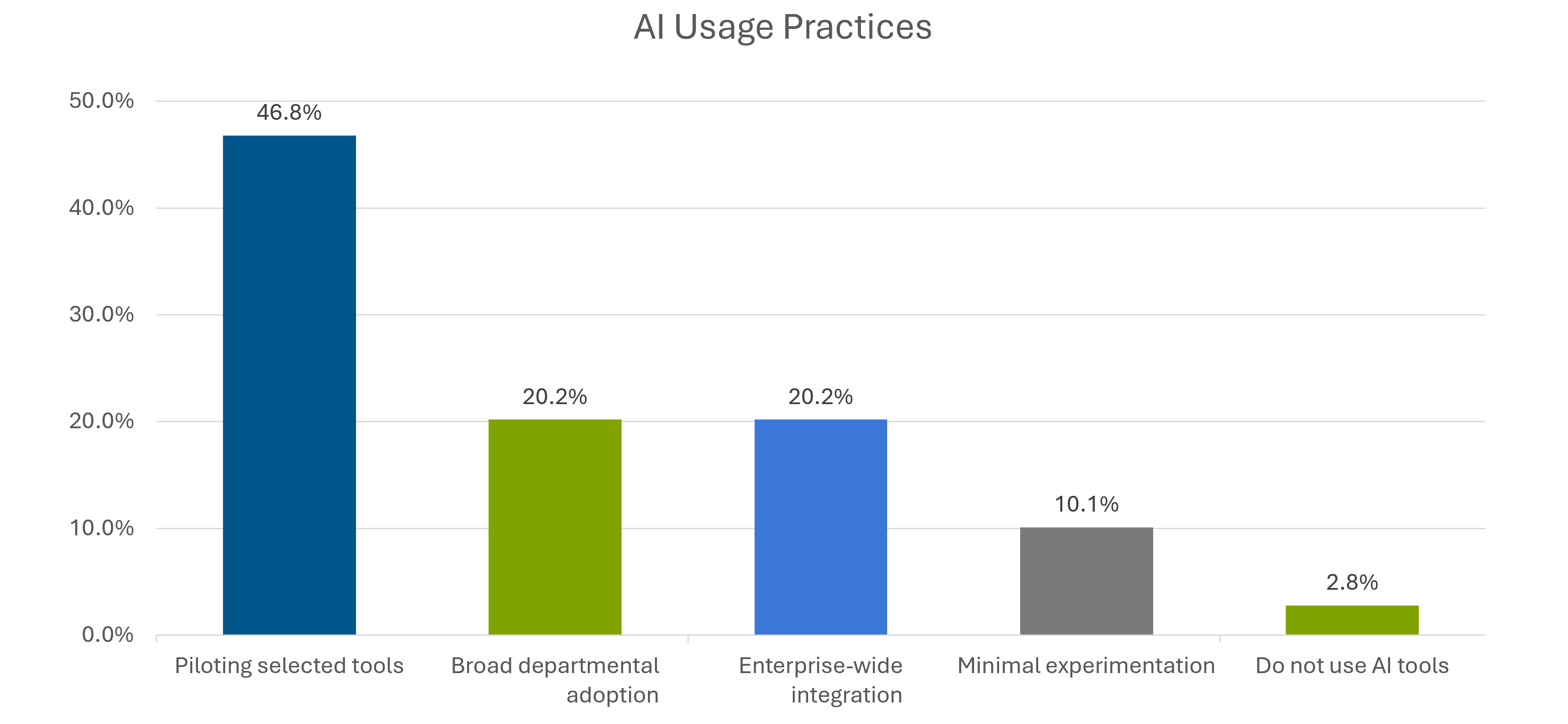
This distribution indicates that many organizations are still evaluating their future use of AI and learning to successfully integrate the technology into existing workplace practices. Introducing a tool may be relatively straightforward; identifying appropriate applications, establishing internal processes, and encouraging consistent use can take considerably longer. While AI investment continues to accelerate, these results suggest that widespread transformation remains a work in progress.
Governance and Risk Management
The survey also reveals a cautious approach to AI governance. 41.8% of respondents permit AI usage with restrictions, such as limitations on sensitive data or approval requirements. Another 30.9% allow only approved internal AI tools, while just 24.5% of organizations report fully permitting AI usage with established guidelines.
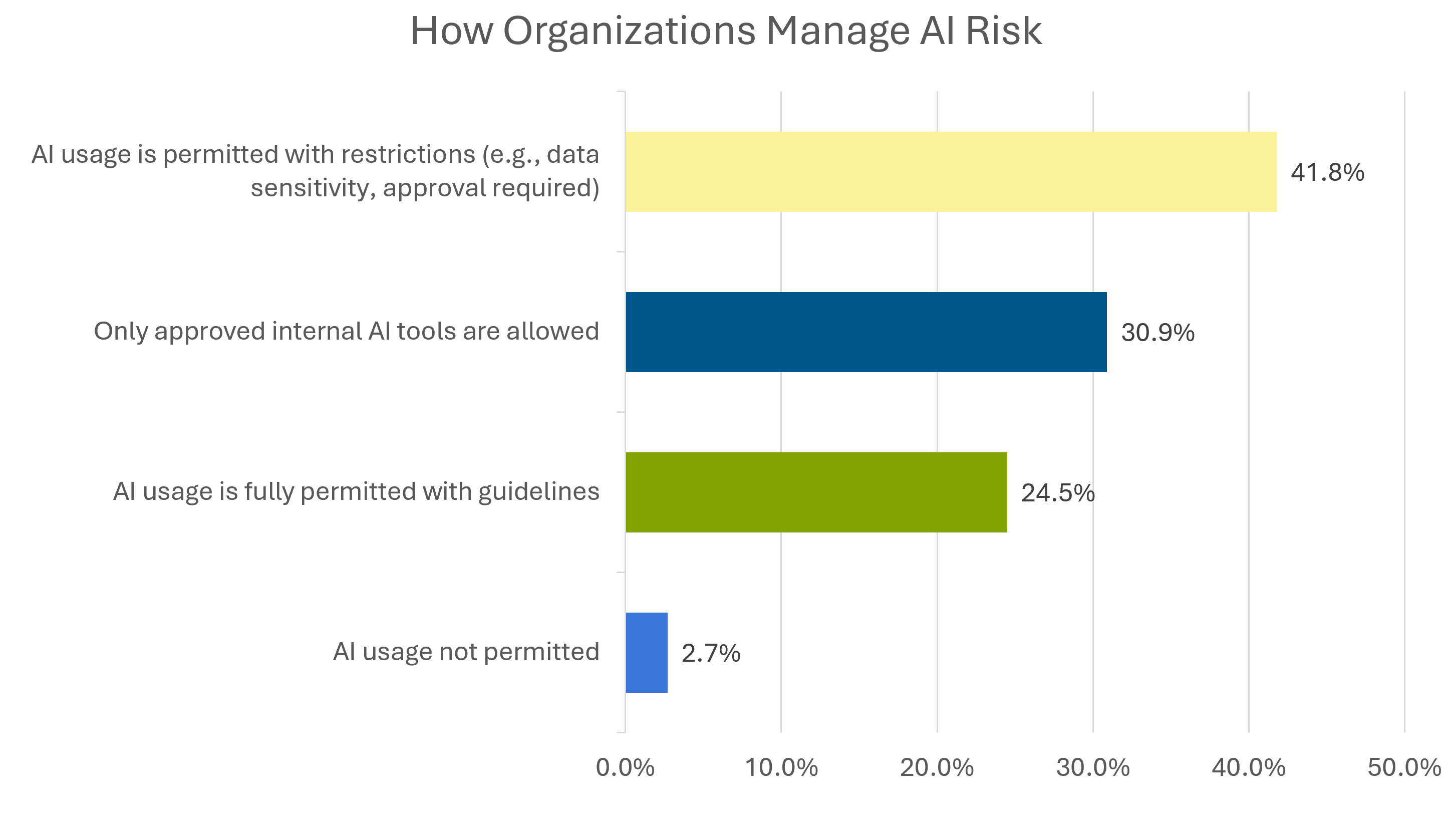
Organizations recognize that while AI can be a powerful productivity tool, it should not be embedded without restrictions. At the same time, the presence of clear restrictions does not necessarily signal resistance to AI. Defined boundaries may give employees greater confidence about when and how the technology can be used. As AI adoption continues to expand across organizations, governance frameworks will evolve alongside it to address concerns and promote both responsible and secure use of this technology.
Leading Platforms Drive AI Adoption
When assessing AI tool usage, Microsoft 365 Copilot was the most frequently reported platform, with 77.9% of organizations reporting its use. Adoption rates for OpenAI’s ChatGPT and Google Gemini also dominate the industry, with usage rates of 38.5% and 19.2%, respectively.
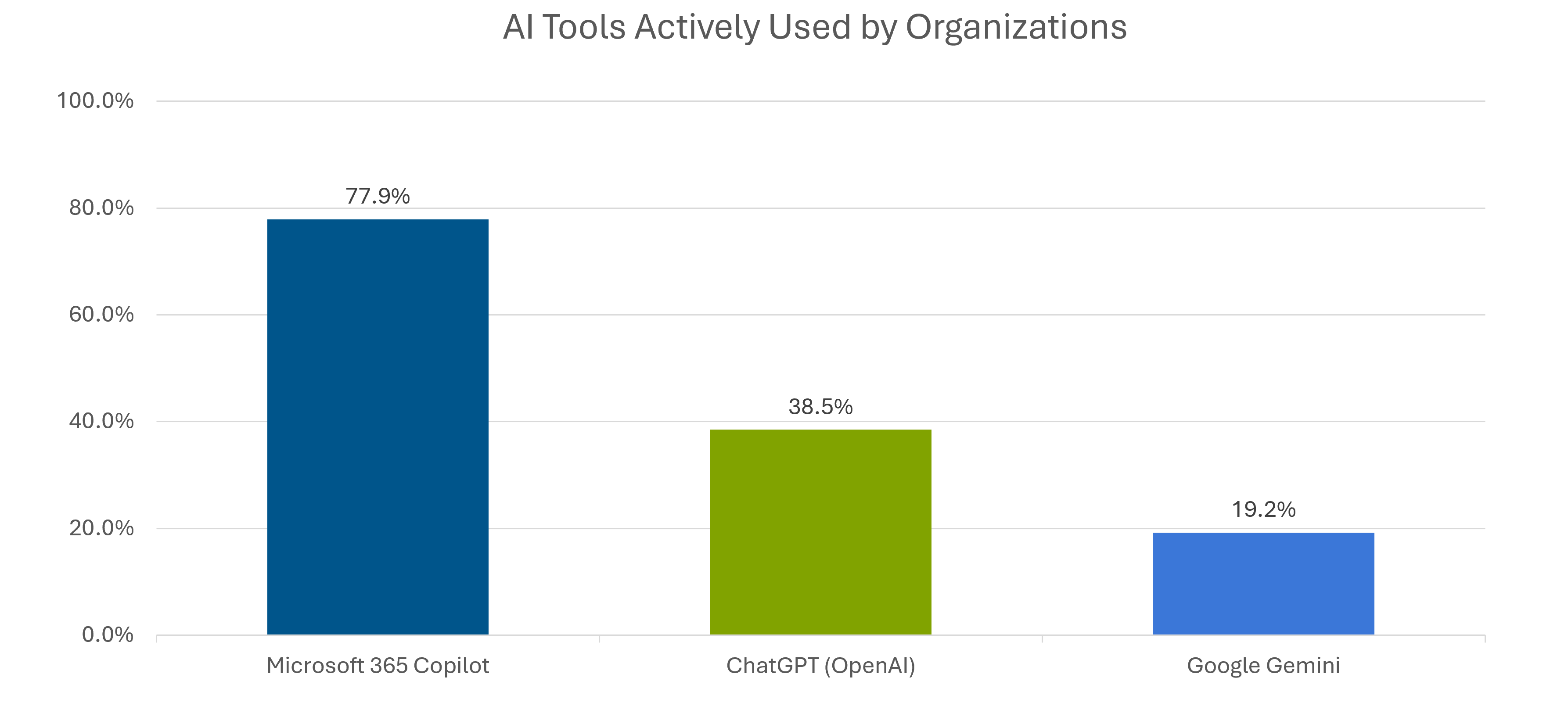
These patterns suggest that many organizations are standardizing a small set of approved tools that can be more easily managed, monitored, and governed—rather than using a wide range of different AI platforms. The prominence of established enterprise platforms may also reflect employers’ preference for tools that can fit within existing technology environments and security practices. Organizations are seeking secure artificial intelligence platforms to incorporate into their companies without sacrificing efficiency or compromising sensitive information.
Looking Ahead: The Need for Reliable Market Data
Reliable market data will remain pivotal as organizations continue to refine their AI processes and build the teams needed to support them. The findings highlighted here represent only a subset of the insights available through Pearl Meyer’s 2026 Cyber Security, AI, and Data Science Salary Survey, which provides competitive base salary, short-term incentives, and total cash compensation across cyber security, artificial intelligence, robotics, and data science roles. It also gives organizations a broader view of the workforce practices surrounding these increasingly important functions.
For employers assessing their AI capabilities, this information can help connect technology decisions with related talent questions: whether current roles are appropriately structured, how compensation compares with the market, and where additional skills may be needed as AI adoption expands.
Additional information, including the data reported and participating organizations, is available in the survey prospectus. Organizations may also purchase the complete survey report for access to the full compensation and practices results here.
For more information on participating in next year’s survey, contact survey@pearlmeyer.com.
Note: This article was coauthored by Eva Connolly.