Podcast | May 2026 | The Pearl Meyer Unscripted Podcast
The PE CFO Balancing Act: Play Maker and Game Manager
S3 Ep6: Why today’s PE CFO must pair capital discipline with strategic creativity to help portfolio companies grow without losing sight of the exit.

David: Boards and senior executives are navigating a world where strategy ages quickly, talent is stretched thin, and technology is reshaping leadership itself. In this season of Pearl Meyer Unscripted, we're exploring the real conversations happening today in boardrooms and the C-suite, and the new rules and adaptations required for executive leaders to be effective.
The Private Equity CFO Balancing Act: Playmaker and Game Manager. The private equity portfolio CFO has always needed to be strong on the fundamentals. Numbers the board and lenders can trust, audit-ready controls, clean reporting, and a finance function that can keep up with a sponsor's tempo. In many environments, a steady 'game manager' CFO could succeed, especially if the business was growing and capital was plentiful enough to cushion mistakes. That profile breaks down, however, in today's more constrained environment.
The modern private equity CFO must be strategic—but in a way that's distinct from, and complementary to, the CEO's strategy role. The CFO has to be a thought partner who helps the CEO creatively solve big problems while also serving as the capital discipline engine, protecting liquidity, ensuring effective use of capital, keeping the exit in view, and critically, doing all of that without becoming the person who unintentionally blocks the very strategic creativity the company needs. This episode explores that tension and how to identify CFOs who can actually live in it.
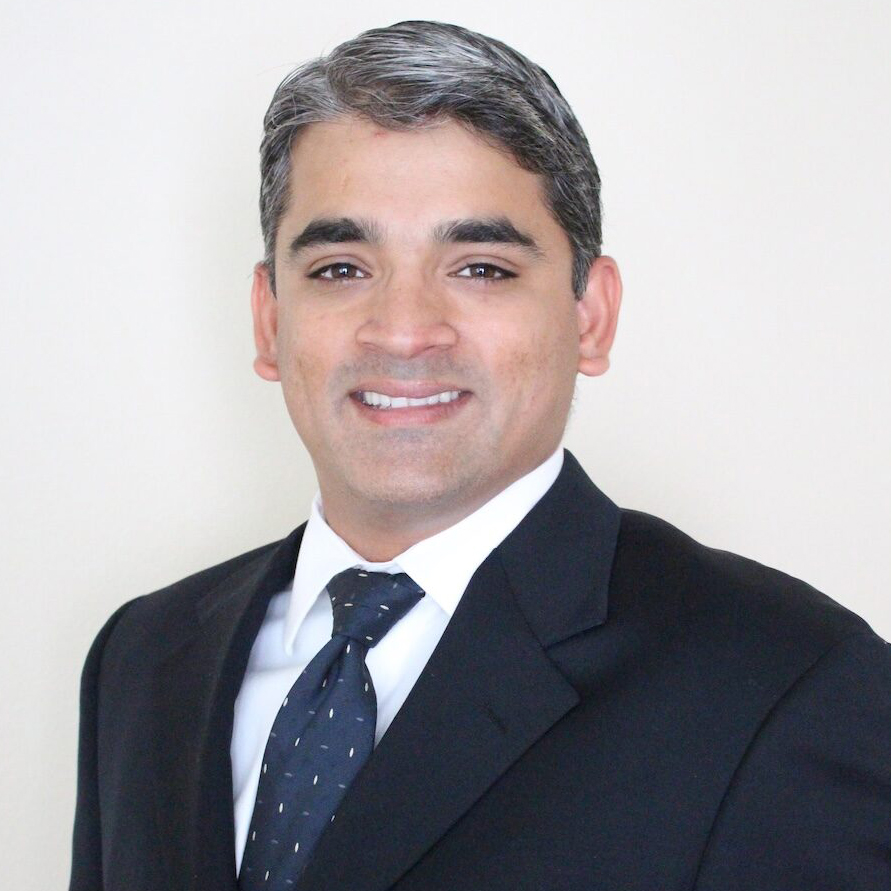
I'm pleased to have with me today: Vamsi Tetali. Vamsi is a managing director at Pearl Meyer and a trusted advisor to boards, CEOs, and investors on leadership decisions that really matter. Over the last decade, he's conducted more than 800 executive assessments, most focused on CEO and CFO roles, and has helped private equity firms and portfolio companies navigate leadership diligence, succession, and organizational change. Thanks for joining me today, Vamsi.
Vamsi: Happy to be here, David.
David: Let's start broadly. Why does the game manager private equity CFO profile fail, especially in today's high-constraint environment? And what does a strategic PE CFO do differently?
Vamsi: Yeah, it’s two things mainly, David. If you look at the function of the CEO, they're trying to define what the organization does and doesn't, and they're trying to then look at how well orchestrated the actual execution is against that definition. And the CFO does two things to help with that. One is, they make sure on the board's behalf, and on the shareholders' behalf, that the CEO is actually focused on that. They create the room that the CEO needs for that.
The second thing they do is they supply the right kind of information. And one of the biggest things that the CFO does is help the CEO understand what the financial constraints are. There's a lot of nuance to that. It goes way beyond just giving numbers.
But let's go back to the first piece, creating the room and ensuring that the CEO is actually doing the strategic work needed. There’s a few components to that, but the general notion behind what that is and how it's well done, is that the CFO provides the CEO the transparency, clarity, and measurability needed for them to very efficiently know what's going on so that they can react to it.
The CFO tends to have the most number of calls with the CEO, which means they have the most number of opportunities to help them kind of ensure they're focused on the right things, et cetera. So that's one piece, which is making sure that the CEO is focused on the strategic.
The second piece is providing information on constraints. And there are many, many things that the CFO provides information on, starting from: What level of capital do we have? What's the kind of threshold of return we need on a particular project? Because different projects, at different times, will have different assumptions behind them. What is the operational health of the company like from the numbers and beyond? What other financial constraints are we looking at that are more detailed and lower-level in nature?
To do all of these well, the CFO needs to have a granular understanding of the business. They can't just know the numbers. But they do need to know the numbers. They need to know them really, really well, but they also need to know what they mean. And what this does is helps them surface exactly the right thing at the right time in a way that's helpful to the CEO as they're thinking through strategic problems.
David: Right. I mean, what you're laying out Vamsi is an extraordinarily complex role and certainly is expanding my mind and definition of a great private equity CFO. But as I think about it, there's a lot of balancing that has to go on. And how should the private equity CFO balance the mandates as you've sort of described them?
You know, one being the CEO strategic thought partner and providing the CEO with the information in a capable manner, but also being the sponsor's fiduciary and capital representative. And how best can they balance that without getting in the way of creative problem-solving?
Vamsi: Yeah, it's a tough balance, right? You have many, many options, knowing the details of things is going to be important for you to choose the right option. So that's the big problem that they're faced with, right? Is, you need to understand the business well enough for you to know which fact to bring and present it.
A lot of knowledge can also be a little bit of a curse in the sense that it can make you very acutely aware of what can't be done. And there's a very real risk that the chief financial officer becomes the chief ‘no’ officer in the sense that they say no to most questions that they're asked. And the real art here is understanding how to right-size the problem-solving that the CEO and the CFO's peers are doing when it comes to strategy, but not right-sizing it to such an extent that there's no problem-solving at all. That it's just the solution space is so small and everybody just decides that it’s just not an option anymore. And again, it goes back to clear understanding of the company and the mechanics of the company.
David: Right, right. And the context, obviously so important as to, as you say, what to share and what not to share and what to emphasize and not to emphasize in a way that allows the CEO and frankly other functions to think as expansively and creatively as possible within the boundaries of the operating entity.
Pivoting a little bit into your area of strength. You know, and again, I'm harkening back on the complexity that you've described and what clear signals have you observed that can help your clients, PE sponsors, choose a really good thought partner CFO instead of a numbers-only one.
Vamsi: Yeah, well, it does start with the numbers-only piece, right? In the sense that, you need to make sure that this person understands what it takes to build a trustable system of financial numbers—it goes all the way through control and accounting. That's the main thing. You need to check for that. You need to check for them either having a solid track record or at least just demonstrating that, even if they haven't really learned accounting themselves, that they've found ways to ensure that control is at the level of standard it needs to be for a private equity owned company or a private company or even a public company, honestly.
Again, one more foundational thing is, you need to make sure they know how to interpret the numbers. So that FP&A track record (Financial Planning & Analysis), the budgeting, and the nuance they put behind budgeting. Everything has to be proven from their past, either directly, or you need to have really solid indicators that they have the ability to run FP&A the way it needs to be done, which means to interpret the numbers within the reality that they're in.
And the third piece is the real secret sauce. This is the thing that you simultaneously don't want to underestimate, but also invest a lot in, which is, 'How much intellectual horsepower do they have?' They don't necessarily need to be the smartest guy in the room, but do they get it? Are they capable of seeing the company at an abstract enough level to understand how it fits into the broader world that it's in, the industry, the geography, whatever it is.
Do they have the ability to see trade-offs? That's one of the more important things at the executive level that is not needed below that is, you need to be able to see trade-offs, sometimes even if you don't have the information for it. And some way of testing for that is important when you're assessing CFOs.
David: Yeah, I fully understand trying to dig in and needing to dig in on the accounting side, the FP&A side as you described, but also on the nuanced intellectual horsepower element. Are there red flags that you see time and time again that lead you to advise your clients that, ‘hmm, this may not be the right person?’
Vamsi: Yeah, there are a couple of things that show up relatively frequently for people who, even if they have the technical know-how, may not have the intellectual horsepower for the job, at least not to be a strategic CFO.
One is, there tends to be more of a, ‘I have a playbook and I'm going to implement it’ sort of feel to their background. You should dive deep into their background, how they've thought about things, how they've done things.
And if you get the sense that they're more of a playbook-down person, as opposed to a person who knows that the playbook is only 30% of the work and 70% is in customization, that's one sign that shows up repeatedly, that there may not be enough nuance, or at least they may not be approaching work with enough nuance, to factor in trade-offs and all these additional complexities.
The other one is lack of a reference to strategy. A lack of a reference to the context in which the work was done. For example, a CFO who says, “We did the ERP implementation, we kind of went with a smaller ERP, not with SAP, because we're in an industry that operates a lot leaner. We saw cost pressures coming up, we had a heavy debt load. So, we just wanted to not go for an overkill solution.” That's a much better answer than them saying, “Well, between SAP and all of these other options, we chose option X because that meeting went well," or their offer was more tactical and operational details.
The more of a reference you see to that and the less of a reference you see to contextual, strategic things, the more of a—not a red flag necessarily, but more of a negative flag—it is that that person may not have what it takes to be that strategic CFO.
David: Right, right, makes sense. And I suspect that there are other examples like that where even talking about the business strategy would lead you as an advisor and assessor to say, “Okay, this person has spent the time to understand the business at a deeper level and is a better partner and advisor to the CEO,” and giving the CEO, as you described earlier, the space that they need to be creative and to follow the company's mission. Now, many of our listeners work in private companies that aren't PE-backed or public companies. Do we see similar challenges in those sorts of companies?
Vamsi: Absolutely, private equity owned and private companies are essentially the same thing. You just have greater investor scrutiny and a more active board in the private equity world, but the challenges are the same. So those are very similar CFO roles. The only additional thing a private equity CFO needs to know is, they need to have the additional nuance of exit timelines, hold periods, and just general exit skills in addition to everything else. But those are temporarily used, right? Like you're not going through an exit every single year. But that's a difference between private and private equity owned.
Then there's the piece around public. Largely, the fundamentals are similar. In public, one extra huge pillar of fundamentals gets added, which is investor relations. Investor relations in public companies is different from working with the investor in a private equity situation. You’re kind of working hand-in-hand with the investor in the private equity situation, but here you're communicating. You need to be careful about every word. There's a whole art to it on its own. And a percentage of your time just goes into that.
It's important that for a given revenue, or size, or complexity, a public company CFO would face an additional demand on time versus the private equity backed CFO because of this one huge area. And it's important for them to create that time through better delegation, more of a operating system under them that functions in a better way.
David: Yeah, that makes sense. And it's interesting, in a prior episode, we talked about a similar challenge that CEOs of public companies have, especially new CEOs, that are frequently surprised by the amount of time that working with the board demands of them. And so therefore, being ready for it and having the ability to work in those gray areas is ever more important.
Well, we have just a couple of minutes left and I always like to ask this question at the end of these episodes. And so, I'll ask you as well, Vamsi, is there an assumption that PE sponsors or chief executives or boards should be letting go of right now regarding recruiting, retaining, and developing the most strategic CFO?
Vamsi: Yeah. The biggest assumption is it's kind of informed by market reality, David, is the assumption that you can kind of fill in for the strategic piece of CFO work as a private equity board member. Private equity board members tend to be, irrespective of the firm, really smart people. Often, they have the intellectual horsepower to do that piece, but having the intellectual horsepower doesn't mean you can necessarily do that piece because it takes intimate knowledge—and intimate sort of immersion into the operation itself—for that piece to be done right.
So, there's a huge difference between being able to look at the numbers, call up somebody and ask them to explain the numbers, which is, I think, as far as the PE company can go, yes, you can do field visits and stuff, but you are looking at multiple things at a time. There's only so much you can do. Versus somebody installed in there that can do that piece along with taking care of the financial engine. There just will be a lot more intimacy with the numbers and with the reality. So, it's really, really important, I think, for private equity companies and our clients we've seen this—irrespective of how hard it's been to hire CFOs—don't settle for a game manager.
David: Right, right. And I think that's a perfect period at the end of the sentence because I fully subscribe and understand your point that having members of the private equity board or members of the private equity team, the sponsor, filling in for an operating role, rarely yields a good outcome.
So, okay, well, listen, I appreciate your time and look forward to speaking on further matters at a later date.
Vamsi: Sounds good. Thank you.
David: My thanks to Vamsi for his insights into the unique challenges that come with being a successful and truly value-creating private equity CFO.
Reflecting more broadly on the leadership challenges we've explored during this season of Unscripted, they really are emblematic of the fast-changing and increasingly complex environment that executive leaders and board directors must navigate in order to be effective.
While the landscape will continue to evolve, the areas we've focused on—choosing the right leaders, succession planning and talent development, navigating volatility and company transformations, and getting culture right—remain enduring priorities and critical performance drivers.
Looking ahead, the leadership experts you've heard from will continue providing advice and absorbing wisdom in boardrooms and the C-suite. We'll be back to share their learnings in future episodes. Until then, be sure to follow Pearl Meyer on LinkedIn and at pearlmeyer.com for the latest updates. And as always, thanks so much for listening.
Look for new episodes each Tuesday at Pearl Meyer Unscripted, subscribe to our YouTube Channel, and listen on Spotify and Apple Podcasts.