Article | Jun 2026
Exploration & Production 2026 Proxy Season: Early Return Compensation Insights
Above-target incentive payouts, rising LTI grants, and renewed salary growth are emerging as defining themes in 2026 E&P early proxy filings.

Early proxy filings from exploration & production (E&P) companies indicate another year of strong operating performance, with incentive programs generally paying out above target. While commodity prices remained an important driver of results, many companies also benefited from several years of cost control, stronger balance sheets, and disciplined capital allocation.
This analysis reviews CEO compensation decisions disclosed in the 2026 proxy filings of 10 E&P companies with revenues ranging from approximately $300 million to $60 billion, reflecting performance and pay outcomes for fiscal year 2025. It focuses on three areas: base salary adjustments, annual and long-term incentive (LTI) outcomes, and what trends we may see in 2026.
Base Salary Increases Continue
CEO base salary increases were consistent with 2024, with a median increase of 5% in 2025. They were also largely consistent regardless of company size or operating profile.
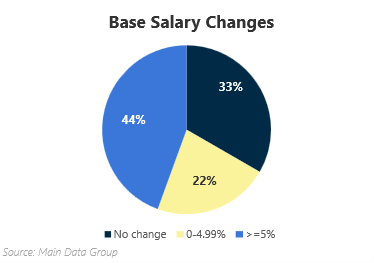
However, all but one company that held CEO salaries flat in 2024 implemented increases in 2025, suggesting that committees may be taking a more cumulative approach to salary adjustments rather than reacting to a single year of performance.
A notable factor across the sample is CEO tenure. Approximately half of the companies have CEOs with five or fewer years in the role. In these situations, base salary increases may reflect ongoing progression toward market positioning, particularly following leadership transitions or external hires.
Annual Incentive Outcomes Reflect Performance and Commodity Exposure
Annual incentive outcomes were generally above target in 2025, with median payouts increasing to 145% of plan (up from 120% in 2024). This level of payout is directionally consistent with broader trends in the sector, where above-target outcomes have been common.
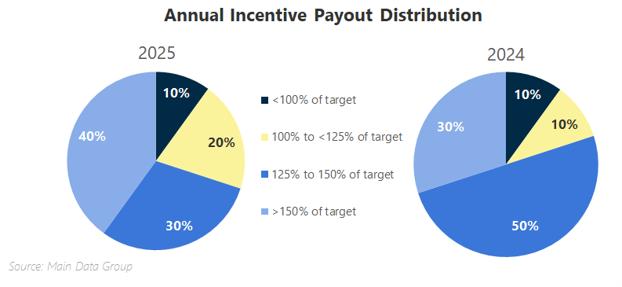
Commodity mix was also a meaningful driver of payout levels. Companies with production composed of at least 50% natural gas reported average payouts of 164% of target, compared to 125% for companies with more oil exposure.
This divergence likely reflects the lag between when performance targets were set and when commodity prices were realized. Following a weaker natural gas pricing environment in 2024, performance targets for gas-weighted companies were likely established on a more conservative basis. As pricing improved in 2025, these companies generated stronger-than-expected results relative to plan. Even among companies with lower natural gas exposure, payouts remained above target, indicating strong performance across the group. However, the magnitude of outperformance continues to be influenced by commodity mix and market conditions.
LTI Grant Values Increase in Tandem with Performance Award Payouts
Increases to LTI award targets were common in 2025, with 80% of companies reporting higher grant values and a median increase slightly above 10%. As with base salary, CEO tenure appears to be a contributing factor. With approximately half of the sample consisting of relatively newer-tenured CEOs, higher LTI award levels may reflect a continued effort to move total compensation toward market, while also reinforcing retention following a period of strong performance.
Among companies reporting payouts for performance-based LTI cycles ending in 2025, approximately 80% delivered above-target outcomes, down from 100% in 2024. Despite this modest decline in frequency, the magnitude of payouts increased, with a median payout of 133% of target (up from 125% in 2024).
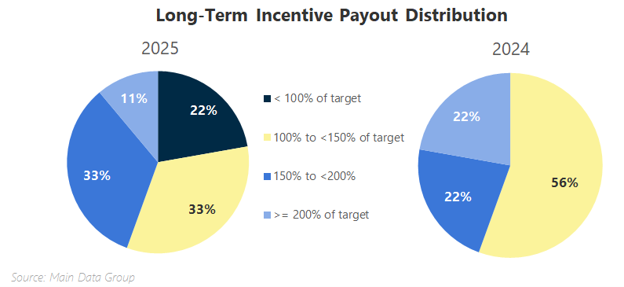
Unlike annual incentive outcomes, companies with higher oil exposure delivered slightly higher LTI payouts (135% of target) compared to natural gas-weighted companies (129%). This likely reflects the multi-year nature of the performance periods and the fact that performance is measured primarily on a relative basis.
2026 Outlook: Flexibility and Operational Metrics Take Priority
Early disclosures from the 2026 proxy season point to three consistent themes across 2025 outcomes in the E&P sector.
- Incentive outcomes remain strong, supported by a combination of improved commodity pricing and the cumulative impact of cost discipline and capital allocation strategies implemented over the past several years.
- Committees continue to reinforce performance through increases in both fixed and long-term compensation.
- The results underscore the importance of goal setting in a cyclical industry. Commodity price movements can quickly drive incentive plan outcomes that differ significantly from expectations when performance goals were established.
Overall, the data suggest a continuation of recent E&P compensation trends going into 2026, with strong performance translating into both above-target payouts and upward movement in target compensation levels. As companies move through 2026, thoughtful goal-setting will remain critical in balancing operational performance, commodity volatility, and shareholder expectations.